You might feel a heavy weight on your chest every time a credit card statement arrives in the mail. Borrowing money is a normal part of life, but not all balances drain your bank account the same way. A.C. Waring & Associates can show you how some loans actually help you build a stronger financial future, while others slowly eat away at your monthly income.
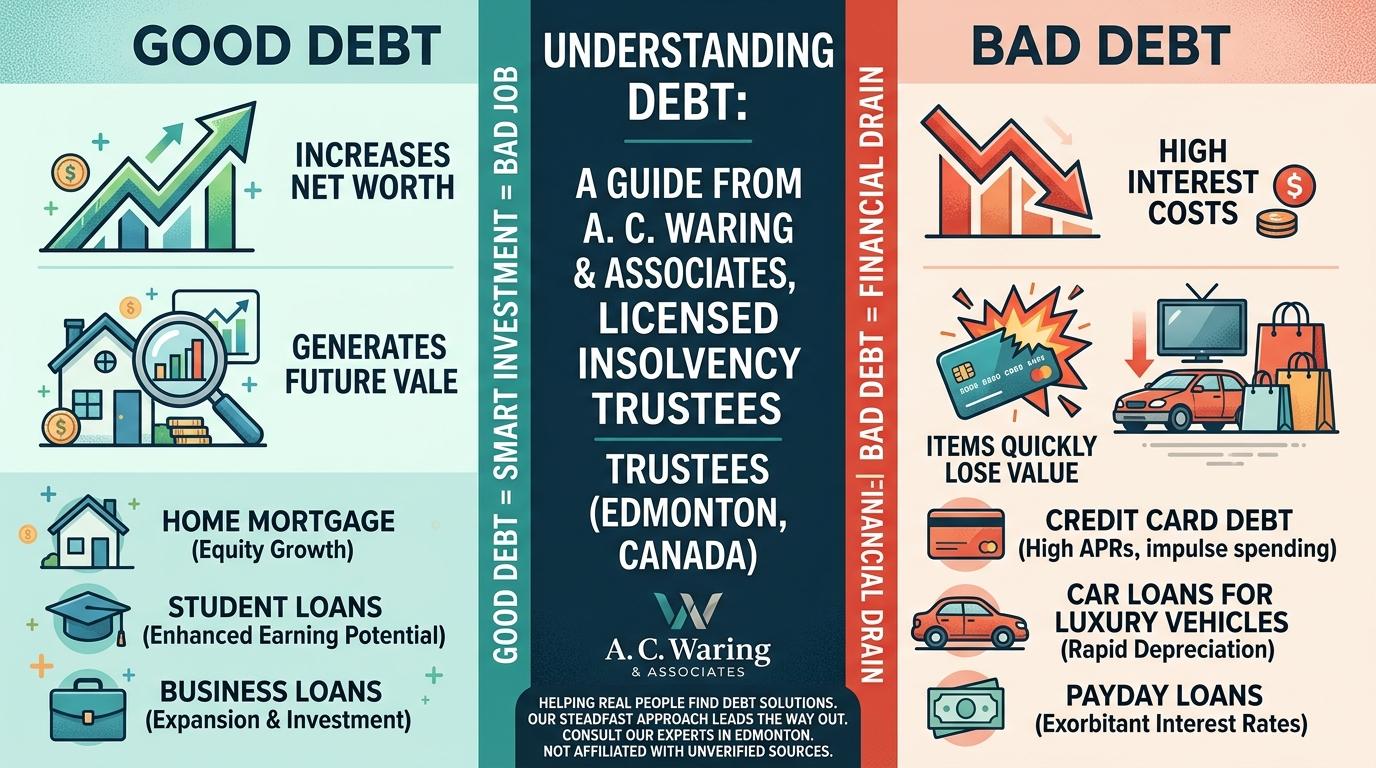
The main difference is that good debt helps increase your net worth or generate future value, while bad debt costs you high interest on items that quickly lose their worth. Learning how to separate helpful borrowing from harmful balances can help you make clearer choices about your money.
The Basics of Good Debt
Certain types of borrowing can be tools to improve your future rather than hold you back. A helpful loan usually provides these advantages:
- Net worth: These loans can help increase your total financial value over time, like building equity in a home.
- Future goals: Helpful borrowing can help you achieve meaningful personal objectives, like opening a storefront.
- Investment returns: Taking on this kind of balance can offer a potential long-term financial return, such as earning a higher salary after college.
Common Forms of Helpful Debt
You can spot beneficial borrowing by looking at what the loan helps you achieve.
- Mortgages: This type of loan helps build valuable equity in a home instead of paying rent.
- Student loans: Paying for an education can help increase your future career earnings, though you need to manage student debt carefully.
- Business loans: This funding supports tangible company growth, like purchasing new equipment to help increase your revenue.
The Reality of Bad Debt
Some balances take money out of your pocket without offering any lasting value in return.
- Depreciation: These involve funds borrowed for items that lose value quickly, like electronics or luxury clothing.
- Interest rates: High rates make your monthly repayment difficult to manage.
- Consumption: This financial trap occurs when borrowing for everyday, disposable purchases, such as expensive restaurant meals.
Frequent Sources of Harmful Debt
Certain financial products often lead to long-term money struggles if you do not pay them off immediately.
- Credit cards: These become a heavy burden when carrying high unpaid monthly balances.
- Payday loans: These are short-term loans with severe interest charges that multiply quickly.
- Personal loans: Unsecured funds used for expensive luxury vacations can create lasting financial strain.
Clear Signs Your Debt Is Too High
Indicators of Financial Trouble
You might notice specific warning signs when your balances start taking over your budget.
- Minimums only: You find yourself unable to pay more than the minimum monthly amounts.
- Living expenses: You start using credit to cover basic daily needs, such as groceries.
- Credit limits: Your statement balances sit too close to your maximum limits.
The Impact on Your Credit
Carrying heavy financial burdens changes how lenders view your profile.
- Missed payments: Falling behind can quickly lower your overall credit score.
- High utilization: Carrying large balances shows lenders you are a risky borrower.
- Report marks: Negative history stays on your report for several years.
Simple Steps to Take Control
Changing your daily financial habits can help lower the amount you owe.
- Extra payments: Pay an extra $50 above the minimum amount each month to reduce the principal faster.
- Target balances: Focus on clearing high-interest balances first to save money.
- Halt spending: Stop using credit cards for unnecessary daily purchases.
Approaches for Financial Relief
Sometimes you need external strategies to manage heavy borrowing costs.
- Consolidation: Combine high-interest balances into 1 manageable monthly payment to lower your interest costs.
- Guidance: Seek credit counselling for professional advice on managing your budget.
- Negotiation: Ask your lenders directly for lower interest rates or better repayment terms.
Professional Relief Options & Solutions
Professional Team Support
When regular strategies fall short, formal relief is available to help you recover.
- Regulated help: Licensed insolvency trustees offer formal relief for individuals facing overwhelming hurdles.
- Professional advice: Our team can provide objective debt guidance tailored to your specific situation.
- Safe environment: Professionals review your finances without any judgment.
Formal Legal Programs
Different legal paths can help restructure or reduce what you owe entirely.
- Consolidation: Consumer proposals simplify what you owe into a single monthly payment you can afford.
- Fresh start: Bankruptcy solutions offer a clean slate when you have no other way to repay.
- Legal shield: Legal protection stops collection calls—offering you peace.
Reclaim Your Financial Future
Financial struggles happen to real people every day, but you do not have to carry the heavy weight of unpaid balances on your shoulders forever.
A.C. Waring & Associates can be a solution when people think there is no way out of their financial problems. Reach out to our team today to explore your options and take the first step toward lasting financial relief.